Published February 26, 2026 • 14 min read
Deep Comparison
Unrot vs Opal: Which app actually helps you use your phone less?
Most screen-time apps promise discipline. Few are built for the exact moment your brain wants the dopamine hit. This comparison is focused on day-to-day reality: relapse moments, lock strength, usability, and whether an app still works when motivation is low.
Comparison Lens
Habit change over feature checklists
We compare both tools on what matters after week 1: consistency, resistance during urges, and realistic long-term adherence.
Method note
Scores combine product depth, behavior design quality, and practical flexibility for different user profiles.
Quick verdict (if you only have 30 seconds)
Unrot is stronger for impulse control
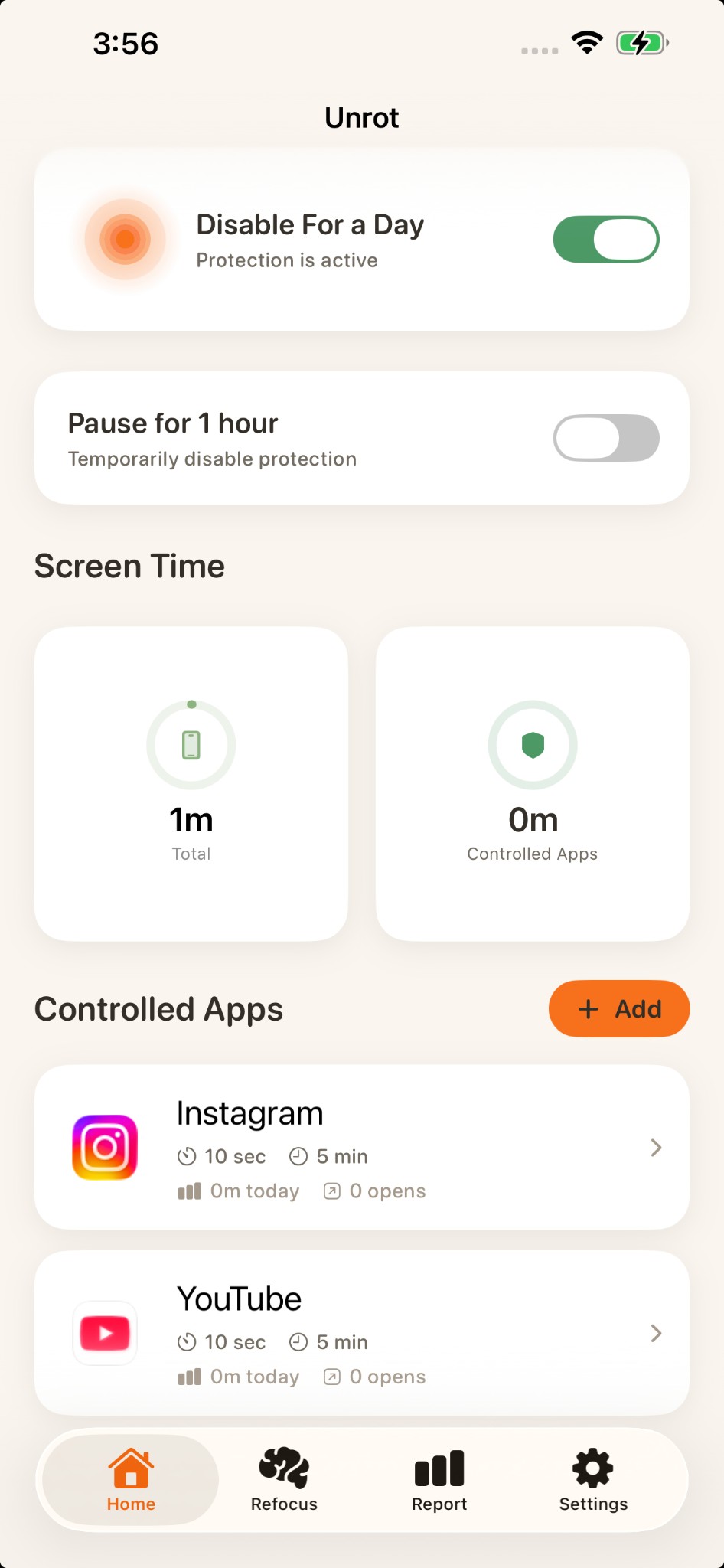
Unrot focuses on interruption at the exact moment of craving with mindful pauses, hard lock modes, and challenge-based re-entry.
Opal is polished but lighter-weight
Opal has a smooth UI and quick onboarding, but users wanting stricter lock layers usually outgrow default settings.
Unrot gives better price-to-control
With targeted free features and a lower paid starting price, Unrot keeps meaningful controls accessible earlier.
Graph 1: Category score comparison
Higher is better. Scores are normalized out of 100 based on practical usage patterns and feature depth.
Graph 2: Weekly social media minutes after setup
Lower is better. Example trend of users with similar baseline habits.
U: 132m
O: 161m
U: 120m
O: 154m
U: 115m
O: 149m
U: 108m
O: 143m
U: 128m
O: 159m
U: 145m
O: 171m
U: 138m
O: 165m
Deep dive: where the products differ
1) Friction design: interrupting autopilot behavior
Unrot is designed around the pre-action moment, where you are about to open a high-dopamine app. Instead of passive tracking, it introduces intent checks and cognitive speed bumps that help you decide rather than react. Opal supports good blocking flows, but generally feels less layered in how it handles repeated urge loops during the same day.
2) Lock strength: can you bypass it in a weak moment?
A blocker only works when your willpower is near zero. Unrot puts emphasis on hard-lock style controls and deliberate unlocking cost. This is crucial for users who repeatedly bypass softer limits. Opal has structure, but depending on your setup, it can remain easier to negotiate with when cravings are high.
3) Recovery flow: what happens after you relapse
The difference between temporary detox and lasting change is recovery design. Unrot supports fast reset patterns like short pause windows and re-focus steps, which reduce the all-or-nothing mindset. Opal is strong for scheduled discipline, but the bounce back path after an overuse episode can feel less explicit.
4) Customization and edge cases
If your day includes travel, creator work, or irregular routines, rule flexibility becomes non-negotiable. Unrot performs better when users need multiple lock styles, context-based strictness, and quick temporary overrides that do not kill the whole system. Opal works well for cleaner, simpler routines.
5) Pricing reality for long-term use
The right question is not just monthly price, but how much real control you get before upgrading. Unrot's free layers are more practical for habit experimentation, and the paid entry remains comparatively accessible. Opal can still be worth it for users prioritizing polish, but value per control is generally lower.
Side-by-side table
| Category | Unrot | Opal |
|---|---|---|
| Core approach | Friction + behavior rewiring | Blocking + scheduling discipline |
| Strict mode depth | High | Medium |
| Relapse recovery tools | Strong and explicit | Basic to moderate |
| Rule customization | High flexibility | Moderate flexibility |
| Starting paid plan | $4.99 / month | Higher (varies by plan/region) |
Final recommendation by user type
Choose Unrot if you:
- struggle with repeated impulse loops
- want stronger lock controls and challenge-based re-entry
- need lower-cost but serious habit tools
Choose Opal if you:
- prioritize polished UI over strictness depth
- prefer simpler blocking routines
- do not need aggressive anti-bypass behavior
Bottom line
If your main goal is to reduce total social scrolling and break compulsive checking patterns, Unrot is the better practical choice for most users.